In 2020, large employers will be “doubling down” efforts to control health care costs. Key strategies will include deploying more telehealth and virtual health care services, Centers of Excellence for high-cost conditions, and getting more personal in communicating and engaging through platforms.
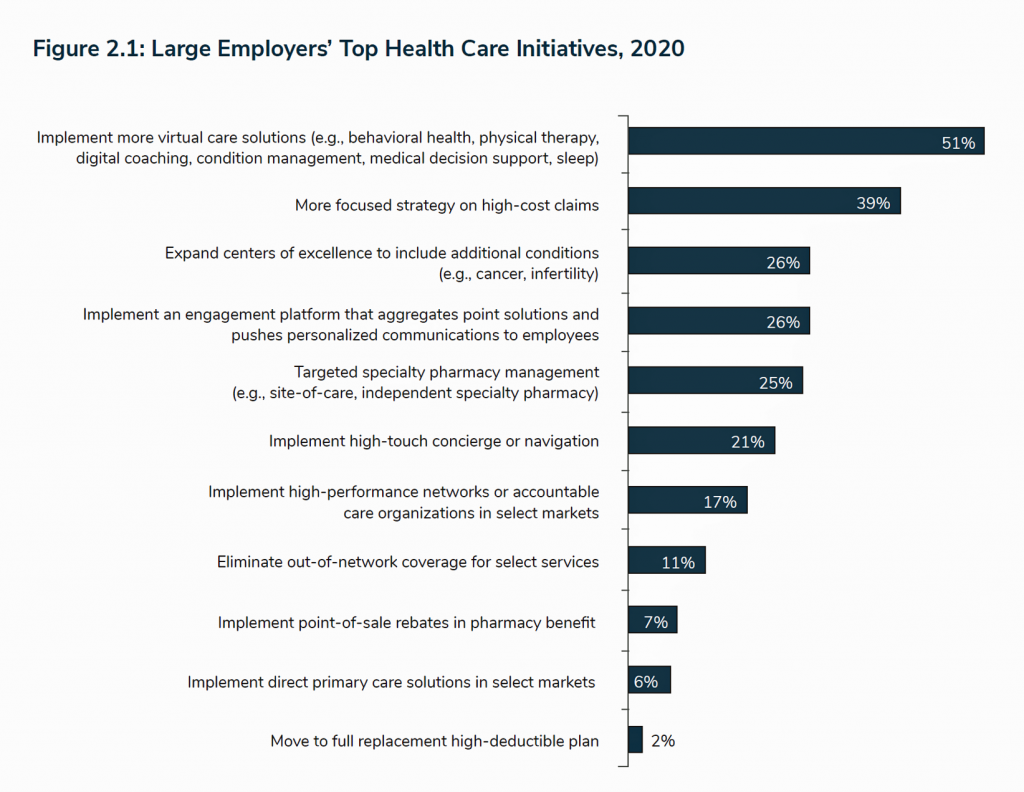 This is the annual forecast for 2020 brought to us by the National Business Group of Health (NBGH), the Large Employers’ Health Care Strategy and Plan Design Survey.
The 42-page report is packed with strategic and tactical data looking at the 2020 tea leaves for large employers, representing over 15 million covered lives. Nearly 150 companies were surveyed in May and June 2019 across industry sectors, with a majority of organizations falling into the Fortune 500.
In this post, I’ll cover three key issues that I’m most focused on for my client work, but I recommend you review the entire report to gain insights into your most-favored topics, too.
Among large employers, the most-favored tactics for managing health benefits and costs in 2020 are to adopt virtual care services across many objectives (from sleep and mental health to managing conditions and wellness coaching), and to focus on high-cost claims (to manage costs and quality). Three tactics tie for third place in large employers’ planes: to expand Centers of Excellence for specific conditions; to implement an engagement platform for personalized communications and health strategies; and, to target specialty pharmacy which is expected to be a major cost-driver for employer-sponsored health plans in 2020 and beyond.
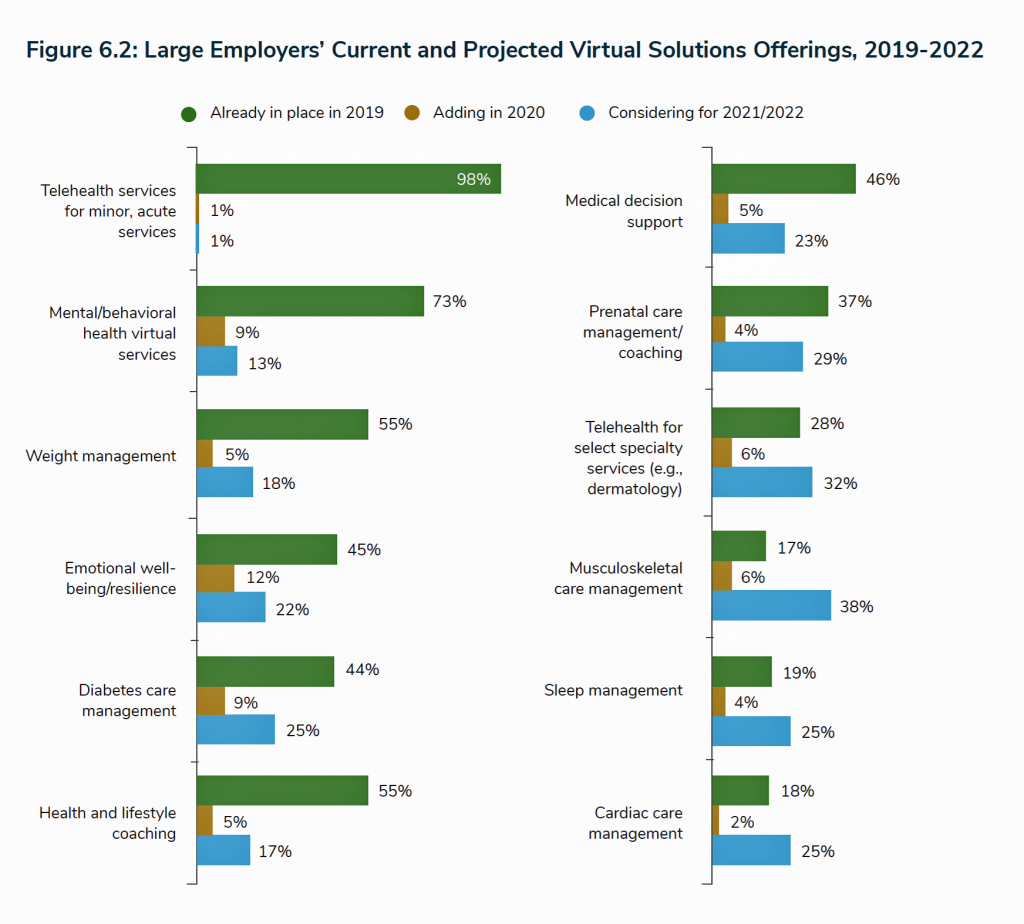 Here are some details about these strategies, which I foresee will impact employees’ health care service flows in 2020. Telehealth services became ubiquitously covered by large employers in the past year, and going forward, specific offerings will, potentially, give more choice and personalization. The growth of tele-mental and behavioral health is seen in the second chart, along with health and lifestyle coaching, weight management, emotional well-being and resilience (with added attention expected in 2020), decision support, and prenatal care. Among conditions, diabetes care is the most-noted area of focus for virtual services.
Expect musculoskeletal care management to gain more attention in a year, looking to more implementation by 2022. This is a particularly high-cost area that was raised in the NBGH study when considering the growth of Centers of Excellence for specific care paths and conditions.
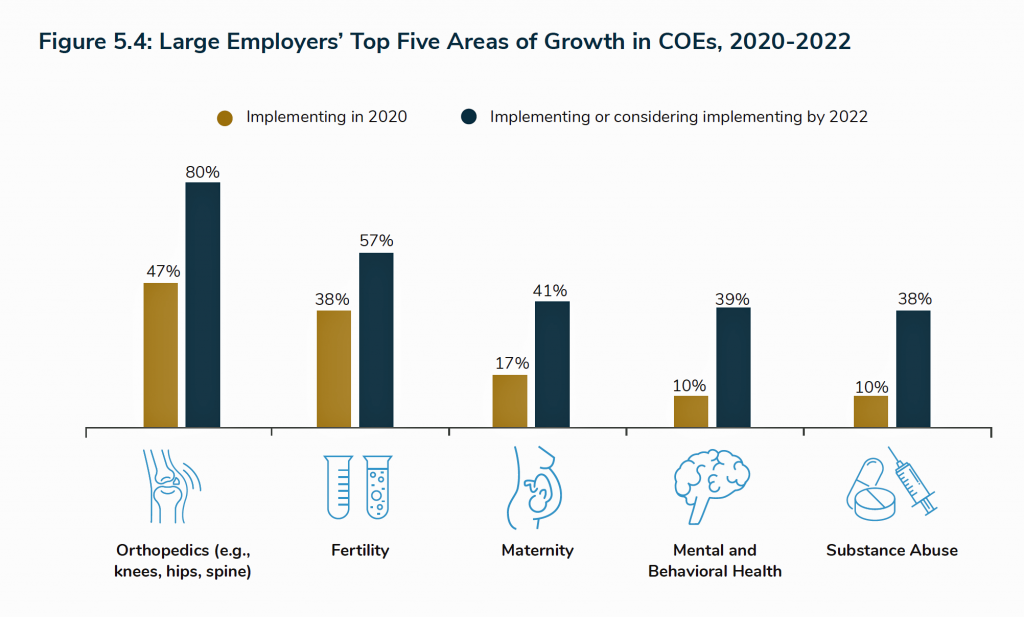 Growth in Centers of Excellence (CoE) is shown in the third chart, with those orthopedic centers top of mind for future plans. In addition, fertility, maternity, mental/behavioral health, and substance abuse are expected to be implemented or seriously considered going forward. Each of these areas has gained more attention in both the workplace along with mass media, most also related to emotional well-being and personal resilience.
On the other end of the specialty spectrum, which can also influence costs and improve outcomes due to upstream investment, are two areas: primary care and social determinants of health, both of which were assessed in the NBGH study.
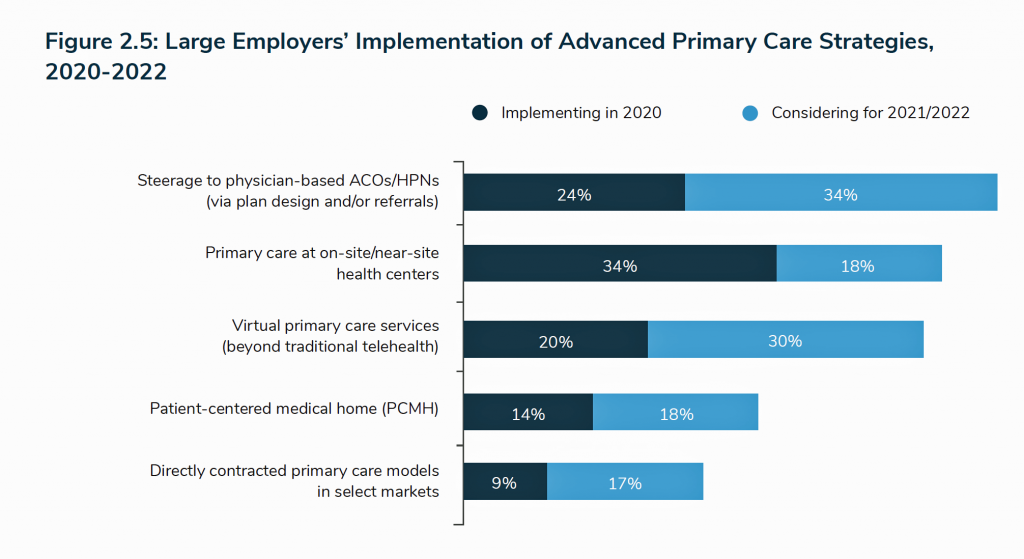
In 2020, on-site or near-site primary care centers are or will be adopted. Looking forward, “nudging” employees to physician-based ACOs through strategic plan design (think: behavioral economics) and promoting virtual primary care services will gain traction in 2011-2022.
Direct primary care models, while gaining attention in certain major metropolitan markets, will remain a strategy adopted by a minority of employers: 9% in 2020, and an addition 17% considering in 2021-22.
Primary care are the services provided by clinicians as gatekeepers and front-line providers for patients. But there’s another source of care that happens even before the person becomes a patient — these are social determinants of health as we make health where we live, work, play, pray, learn and shop. I was keen to see the NBGH take on employers’ views on SDoH in this year’s report.
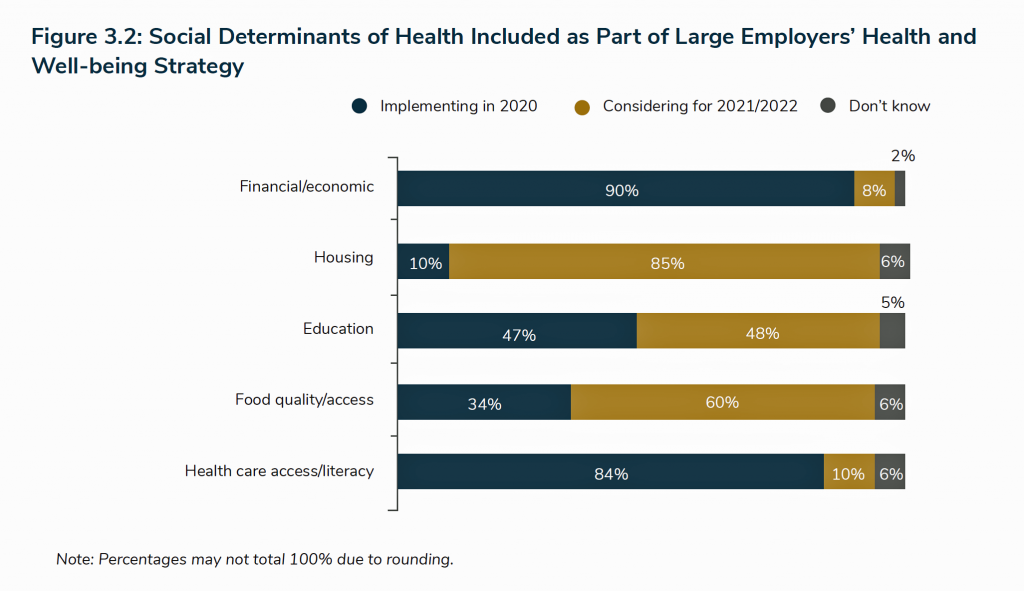
The fourth chart details five core SDoH factors covered in the survey: financial and economic, housing, education, food quality and access (nutrition), and health care access and health literacy. The overwhelming majority of employers are already attending to financial wellness and health care access and literacy. But going forward, housing, food quality, and education will gain increasing attention looking toward 2021-22. Among these, housing is of particular interest to large employers.
There are several key insights I’ll cover in a future post, soon, on employers’ views of prescription drug coverage, pricing, and government involvement.
The post Getting More Personal, Virtual and Excellent – the 2020 NBGH Employer Report appeared first on HealthPopuli.com.
Getting More Personal, Virtual and Excellent – the 2020 NBGH Employer Report posted first on https://carilloncitydental.blogspot.com

No comments:
Post a Comment